
Copper Recovery in Industrial Waste Management
A highly conductive, lightweight, and durable metal, copper is a crucial resource for modern life. With extensive uses across the power generation, electronics, communications, building, and transportation sectors, the demand for copper has rapidly accelerated in recent decades. In 2025, global copper use surpassed 28 million tonnes, and that figure is expected to continue to grow substantially in future years.
Strong demand has fueled strong prices, which has in turn motivated industrial facilities to invest in technologies and processes to recover copper from their waste streams, which can include mining residues, electronic waste (e-waste), and other industrial waste streams. Here, we’ll look at the processes used to recover copper with a focus on hydrometallurgical techniques in particular.
-
Overview of Copper Recovery Processes
Saleable copper is almost completely free of all impurities, ranging between 95% purity (for the lowest scrap grades) to over 99.99% purity (for Grade A copper cathodes). By contrast, the copper content in most any raw source material is generally quite low. Even high-grade ores usually contain less than 5% copper, while electronics waste (e-waste) is usually comprised of no more than 2-20% copper. The term “copper recovery” refers to the complex chain of processes used to isolate the limited copper content found in ore or other source materials, and purify it of virtually all contaminants.
Conventional Copper Production
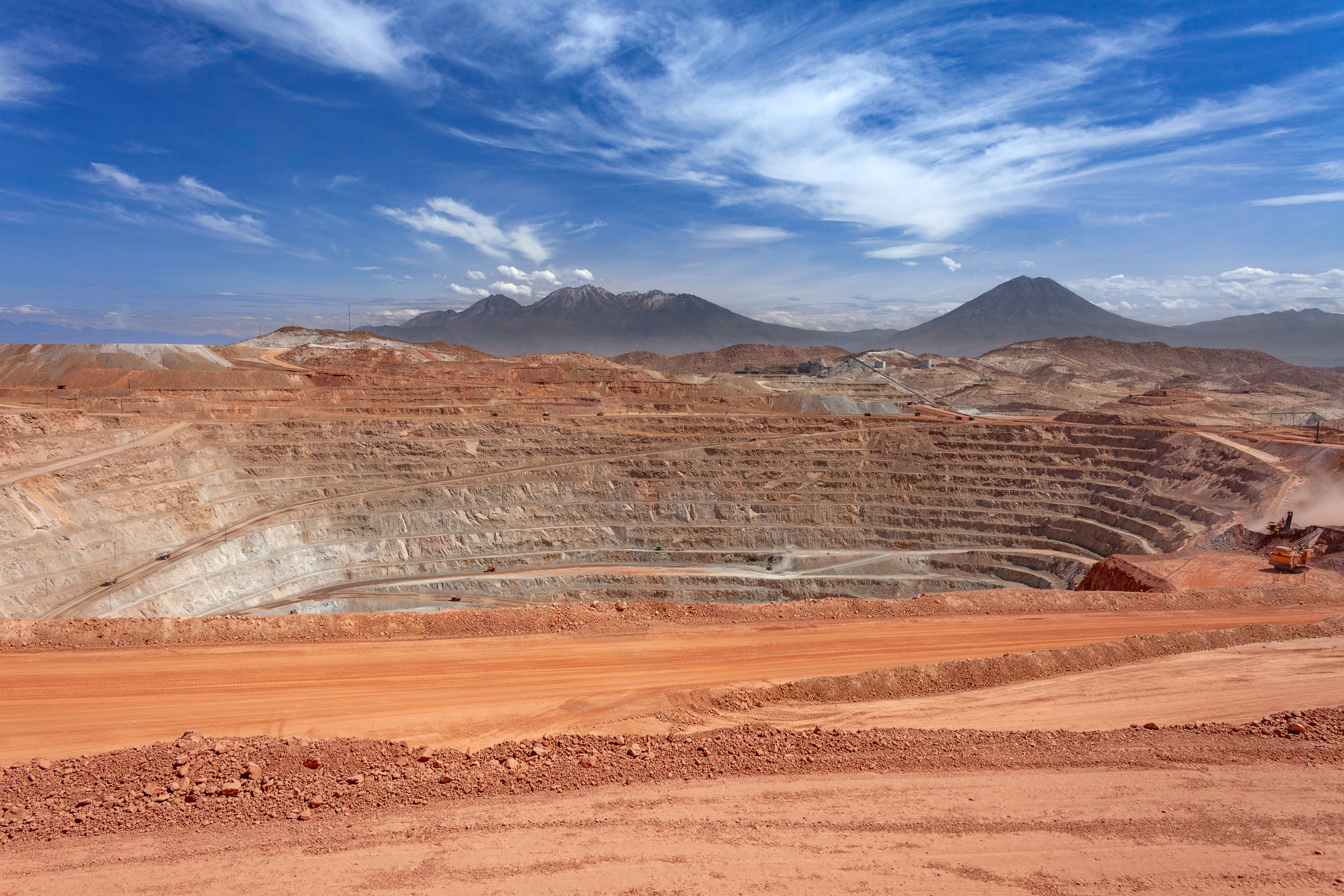
Conventional copper production entails mining ores with minerals like chalcopyrite, chalcocite, and covellite. The ore is pulverized and then processed with a pyrometallurgical (i.e. heat-driven) process known as smelting, which serves to oxidize the copper compounds in the ore so that the copper can then be extracted and refined. These conventional mining activities have high environmental costs due to intense energy consumption and emissions, high solid waste generation from mine tailings and slag, and risks of surface and groundwater contamination from acid mine drainage.
Recovering Copper from Waste Streams
While conventional copper recovery from ore remains the primary method of producing copper, alternative recovery methods and sources have gained ground over the past 40 years. Today, about a third of all copper produced today is derived from recycled sources, and copper recovery from industrial waste streams, e-waste, and mining byproducts has grown more popular as facilities look to create new revenue streams from materials that would otherwise be discarded.
Leaching
Facilities who want to recover copper from solid material such as ore or e-waste will usually begin with a process called leaching. This is because the copper content in solid materials such as ore or e-waste exists as insoluble copper compounds that can’t easily be separated from the other materials present. Leaching is a hydrometallurgical process that converts insoluble metal compounds into soluble metallic salts that can then be extracted during later processing steps. There are a few different leaching methods that copper producers can deploy depending upon which copper compounds are present, as summarized below.
Acid Leaching
Acid leaching, also known as heap leaching, is a hydrometallurgical mining process used for processing copper oxide ores and e-waste. The crushed oxide ore (or shredded e-waste) is first piled onto a leach pad and a leach solution is then applied using a drip system. As the leach solution percolates through heap, it dissolves metals in the ore, producing a pregnant leach solution (PLS) with a moderate concentration of copper ions. From there, the PLS is collected and further processed to extract the copper content.
Most copper leaching applications use an aqueous solution; typically, this is sulfuric acid, although some processes use nitric acid. Copper producers may also choose to add oxidants such as hydrogen peroxide or ferric salts to improve extraction rates. The leach solution is typically reused for additional acid leaching cycles, making acid leaching a relatively low-waste application.
Bioleaching
Bioleaching is a natural process wherein living microorganisms break down metal sulfide compounds as part of their natural metabolic activity. This process is carried out by certain species of bacteria, archaea, and/or fungi who are distinguished by their ability to derive energy from the oxidation of metal sulfide compounds. When used for commercial copper extraction, a water-based process leach solution is added to the ore, e-waste, or other copper source material, and the pile or slurry is inoculated with selected species of microbes. The microbes are then left to oxidize the copper sulfide compounds in the source material. Through a chain of chemical reactions, the microbes convert the copper sulfide into copper sulfate, which dissolves into the leach solution.
Bioleaching is recognized as being an economical and environmentally friendly approach, as it does not produce emissions, and its chemical inputs are limited, requiring only a water-based process leach solution (usually sulfuric acid) that can be reused. Despite these advantages, bioleaching is a slow process that requires anywhere from several weeks to a couple of years to complete, so it is typically reserved for processing low-grade ores and recovering copper from e-waste streams. Nonetheless, bioleaching continues to see growth as the mining industry looks for ways to operate more sustainably and make better use of waste streams.
Concentration & Purification
After leaching is complete, the aqueous leachate is then routed for additional processing steps. The goal is to extract the dissolved copper content in the leachate, and produce a purified stream with a relatively high concentration of dissolved copper. The main process used for this is solvent extraction, however, additional treatment methods may augment this process to improve process efficiency and/or purity of the final product.
Solvent extraction (SX)
Solvent extraction (SX) is a separation method that uses an immiscible liquid to isolate a dissolved constituent from another liquid. In copper recovery applications, SX is used after leaching to separate the copper content out of the leachate. The SX process involves adding an organic solvent to an aqueous leach solution laden with copper ions. The copper ions selectively bind to the organic extractant, and the mixture is allowed to settle out. The result is two streams; the first, a loaded organic phase containing the desired copper ions, and second, an aqueous phase with all other dissolved contaminants. From there, the copper-laden organic solvent stream is mixed with an aqueous stripping solution that attracts the copper out of the organic solvent. Again, the two phases are separated, resulting in an organic solvent stream, and an aqueous “stripped” copper solution. From there, the copper solution will be routed for final recovery through a process called electrowinning.
While SX is a multi-step process that requires use of acid solutions and organic solvents, these streams are typically reconstituted and reused for subsequent extraction cycles. Additionally, SX uses only a fraction of the energy required by conventional smelting. As a result, SX is generally regarded as an efficient process that generates minimal liquid waste streams and emissions.
Selective Precipitation
Selective precipitation is a process that is used to separate a desired metal (i.e. copper) from a solution with other metals present. This is achieved by manipulating pH or by adding specific reagents, like sodium sulfide, iron sulfide, or some organic acids, depending on the chemical makeup of the stream. A flexible process, selective precipitation can be used to recover copper from wastewater or recycled process streams, as well as leachate streams.
Selective precipitation is often deployed in conjunction with solvent extraction. When used ahead of SX, it serves as a pre-treatment method to remove impurities in a leachate solution to maximize the overall efficiency of the extraction process. It can also be deployed after SX to recover copper from the stripping solution.
Chelating Resins
Chelating resin is a specialized type of ion exchange (IX) resin that is used to selectively remove a desired metal (i.e. copper) from an aqueous stream containing other metals or chemical constituents. In some applications, specialized IX resins can deliver more than 99% removal efficiency. As with selective precipitation, IX chelating resin can be used to recover copper from wastewater or recycled process streams, as well as leachate streams, and it may be incorporated before or after solvent extraction to improve the efficiency of downstream processes by eliminating impurities like iron, arsenic, antimony and bismuth, and concentrating copper content.
Recovery
The final stage in producing useable metallic copper is recovery. Today, most facilities will do so by electrowinning, although copper cementation also exists as an older method.
Electrowinning (EW)
Electrowinning (EW) is an electrochemical process that is used to extract dissolved metals from an aqueous solution, and produce solid deposits of the purified metal. Electrowinning usually takes place just after solvent extraction, so the two processes are often paired and represented as SX/EW. Following SX, the stripped copper solution (or electrolyte solution) is fed into an electrolytic cell outfitted with a stainless steel mother blank on the cathode side. An electrical current is then passed through the cell, and the copper collects onto the cathode. The deposition process results in high-purity copper that is ready for casting.
Cementation
Copper cementation is a hydrometallurgical process used to obtain a lower-purity product called cement copper. The copper cementation process is relatively simple, allowing facilities to recover copper directly from leachate or other liquid streams without any intermediary extraction steps. The process works by introducing iron to an acidic copper leachate stream. The iron acts as a reducing agent, forcing the copper to precipitate out of solution and collect as flakes or powder on the surface of the iron.
Cement copper has its uses as smelter feedstock, and as an ingredient in chemical products like fertilizers, insecticides, and fungicides, and other industrial applications, but overall it is far less valuable than higher-purity copper products. With the emergence of electrowinning, the use of copper cementation has contracted significantly, although it remains in use at some facilities.
How SAMCO can help
SAMCO has over 40 years’ experience custom-designing and manufacturing process separation and wastewater treatment systems, so please reach out to us with your questions. You can also visit our website to set up a call with an engineer or request a quote. We can walk you through the steps for developing the proper solution and realistic cost for your copper recovery goals and other ways to optimize your water treatment systems.
To learn more about the innovative technologies that SAMCO uses for process separation and water treatment, visit our blog for other helpful articles, including:
- Understanding Lead Times and Project Timelines for Water Treatment Systems
- Pairing Ion Exchange and Reverse Osmosis for Optimal Water Recycling
- Designing a Water Treatment Plant: What to expect
- Industry Currents: Lithium’s Thirst – Managing Water in the Battery Supply Chain
- How Do You Enhance Lithium Concentration and Recovery from Brine Streams?
- Do You Need to Remove Copper From Your Wastewater?
- What’s the Best Way to Remove Copper from Industrial Wastewater?