
Industry Currents: Water Treatment Doesn’t Make Contaminants Disappear
Industrial water treatment is often evaluated by what comes out of the system.
Does the treated water meet its required specifications? Is the process achieving the necessary recovery? Can the water be discharged or returned to another industrial application?
These are essential measures of performance.
But there’s another question that deserves consideration: What happens to the materials removed from the water?
Depending on the treatment process, contaminants may be separated, concentrated, transformed, or destroyed. When materials are separated from the water, they don’t simply disappear. They become part of another stream that must be managed.
Understanding that second part of the equation is an important consideration in designing a complete industrial water treatment solution.
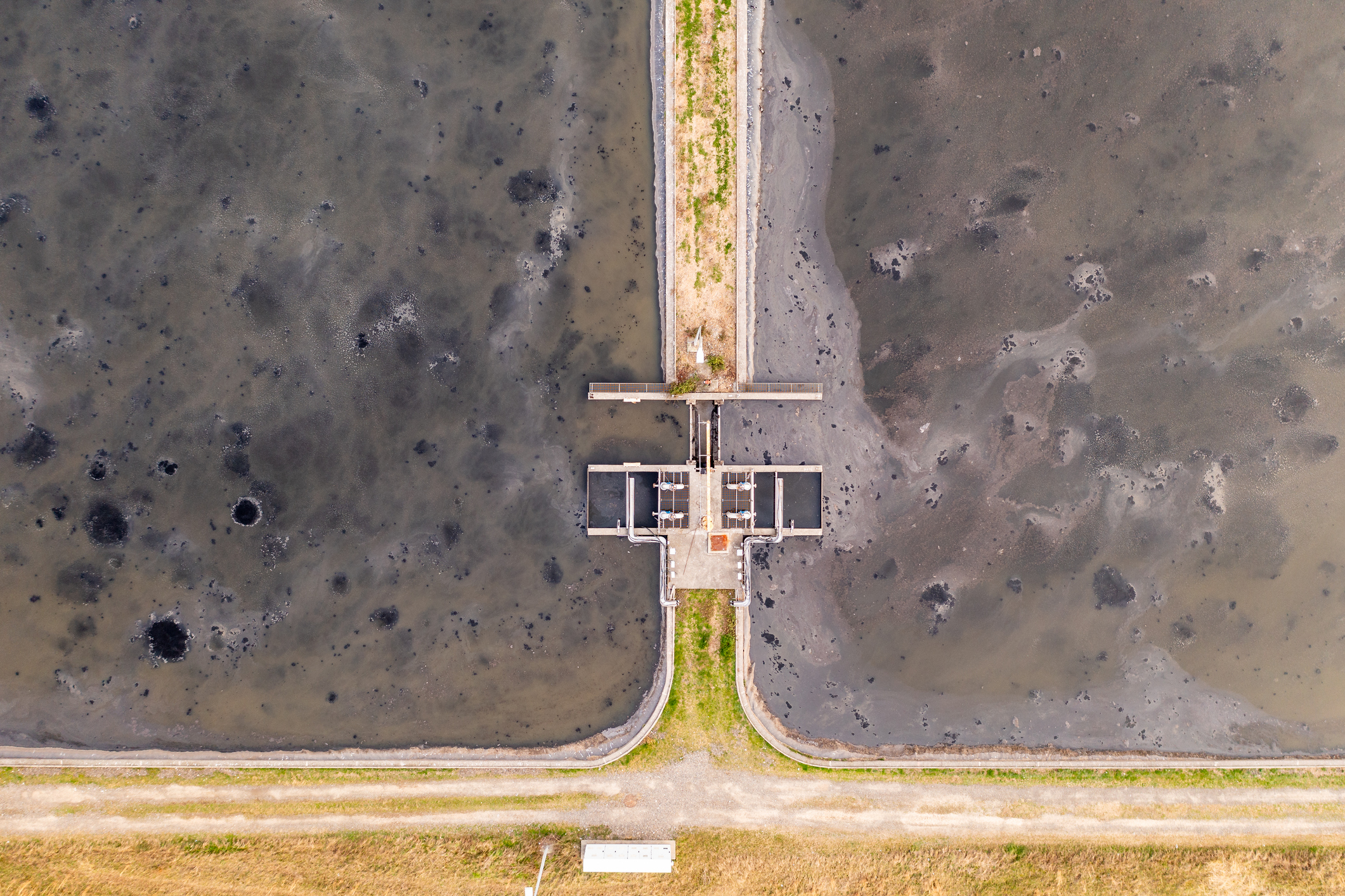
Every Separation Process Has Another Side
Different treatment technologies produce different outcomes.
Filtration captures suspended material, which may be collected or discharged during cleaning. Chemical precipitation converts certain dissolved constituents into solids that must be separated and managed. Membrane systems produce treated water alongside a concentrate containing rejected constituents.
Other processes may generate spent media, regeneration waste, or residual sludge.
The form varies, but the underlying consideration remains consistent: removing material from one stream often creates another material-handling requirement.
A treatment system can meet its finished-water specifications while still presenting operational challenges associated with the residuals it produces.
That makes residuals management part of treatment design rather than simply an activity that happens afterward.
Less Volume Doesn’t Always Mean Less Complexity
Many treatment processes concentrate contaminants into a smaller volume.
That can be beneficial. Reducing the amount of material requiring additional treatment or disposal may simplify certain aspects of waste management.
But a smaller volume isn’t automatically easier to manage.
Concentrated streams may require additional treatment, specialized handling, compatible equipment materials, or specific disposal arrangements. Sludge may require dewatering before transportation. Spent treatment media may require regeneration or replacement, depending on the technology and contaminants involved.
The characteristics of the residual matter just as much as the quantity.
For industrial facilities, this means evaluating both sides of a treatment process: the water being recovered or discharged and the materials remaining after treatment.
Residuals Can Influence Technology Selection
Treatment technologies are frequently compared according to removal performance, recovery, operating requirements, and cost.
Residuals deserve a place in that evaluation.
Two treatment approaches may achieve similar finished-water quality while producing different waste streams. One may generate a liquid concentrate, while another produces solids requiring collection, dewatering, or off-site handling.
Those differences can influence equipment requirements, chemical consumption, operating labor, maintenance, transportation, and disposal costs.
They may also affect the supporting infrastructure a facility needs.
The most appropriate treatment approach therefore isn’t necessarily the one that achieves the greatest removal percentage.
It’s the one that meets the required water-quality objectives while accounting for the operational consequences of doing so.
Consider the Entire Treatment Process
Industrial wastewater management rarely ends at the outlet of a single treatment unit.
A system may require multiple processes to address different constituents. Residuals generated by one step may need additional treatment or conditioning before they can be managed appropriately.
A separation process, for example, may generate a concentrated liquid stream requiring further treatment. A solids-removal process may produce sludge that needs thickening or dewatering.
Each additional step becomes part of the overall treatment strategy.
That doesn’t mean every residual requires complex processing. It means the requirements for managing those residuals should be understood before the treatment approach is finalized.
Considering them early can help avoid a situation where a system successfully addresses the original water-quality challenge but creates an overlooked operational burden elsewhere.
Looking Ahead
Industrial water treatment will continue to be evaluated according to the quality of water it produces and the reliability with which it performs.
But those measures don’t tell the entire story.
The materials removed during treatment have their own characteristics, handling requirements, and costs. Understanding what happens to them can influence technology selection, system configuration, and long-term operation.
A complete treatment strategy considers not only the water leaving the system, but also the residuals remaining behind.
Because successful treatment isn’t simply about what comes out of the water. It’s also about what happens to everything that doesn’t.